
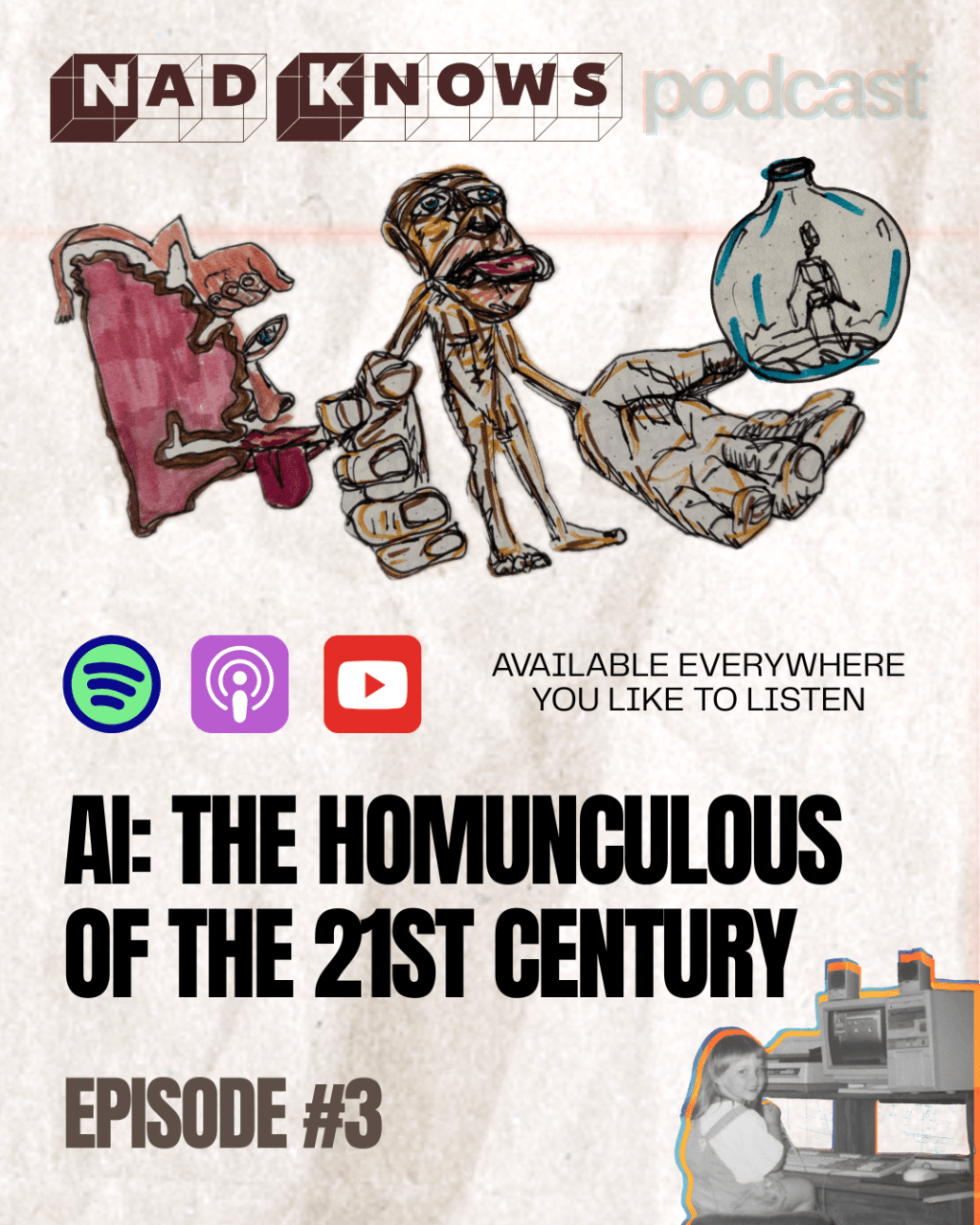
Welcome to a world where ancient alchemic folklore meets cutting-edge technology. In this exploration, we delve into the curious realm of homunculi, mythical miniature humanoids, and draw parallels to today’s artificial intelligence (AI). This journey isn’t just about recalling old legends. It’s about understanding how our contemporary quest for technological advancement echoes centuries-old aspirations.
Understanding the Homunculus: Historical Delights and Disturbances
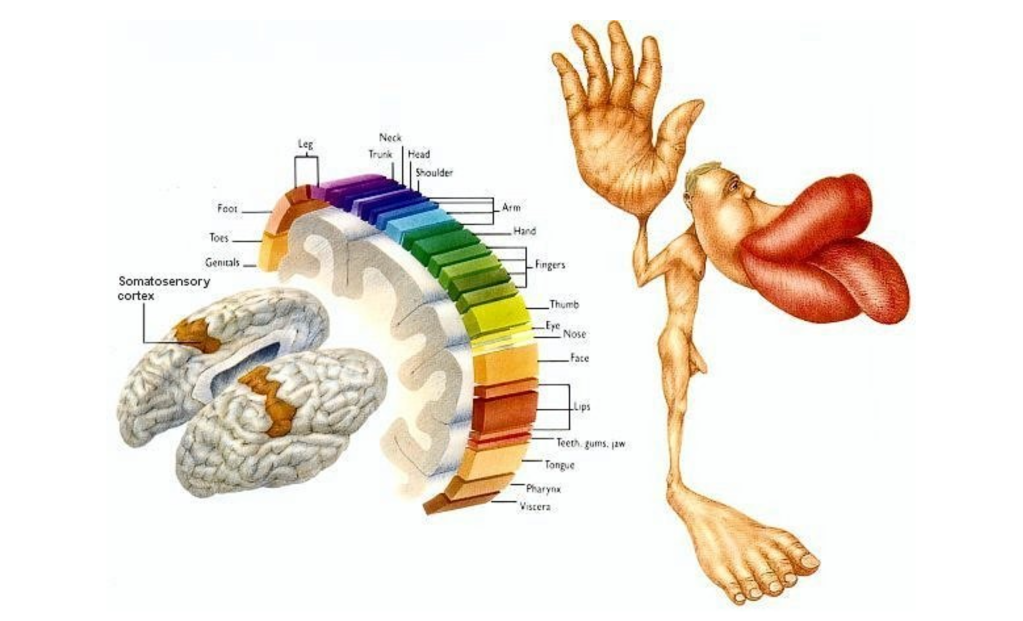
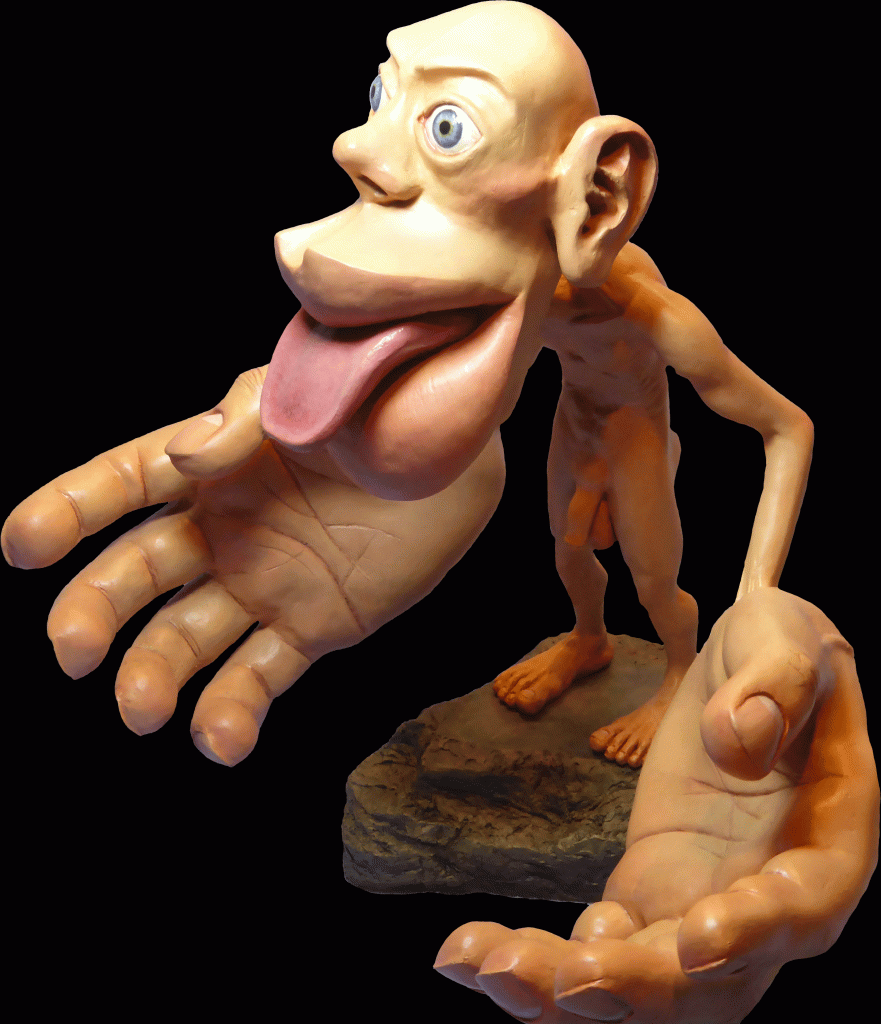
The term homunculus may ring a bell for those familiar with biology or neuroscience, the “cortical homunculus” is a distorted human representations used to map brain function with the corresponding brain space that it occupies.
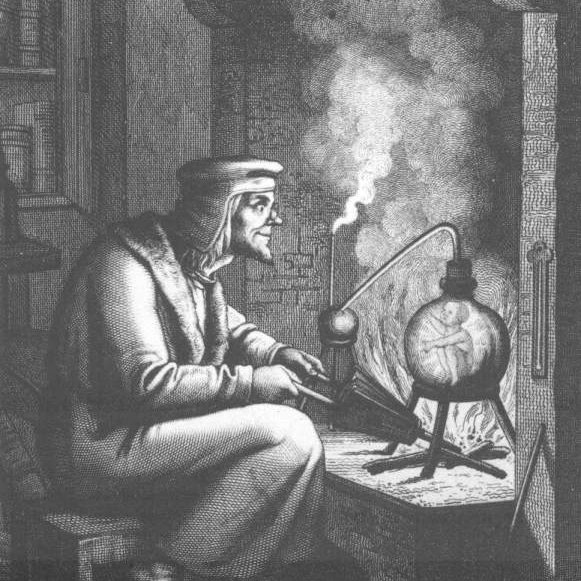
Yet, beyond neuroscience, historical records take us deeper into realms of myth and alchemy—a place where the mystical meets the gruesome. Stories unfold of alchemical recipes from figures like Paracelsus, who described complex (and rather disturbing) formulas intended to create these miniature beings, made out of various animal parts and incubated under peculiar conditions.
There’s a rich tapestry of myths, including tales from medieval Europe involving mandrake roots and myths about the ejaculate from the dead bodies of hanged men giving life to strange anthropomorphic forms that grow underground.
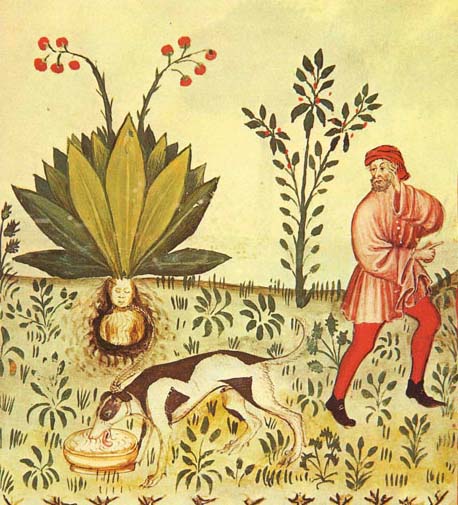
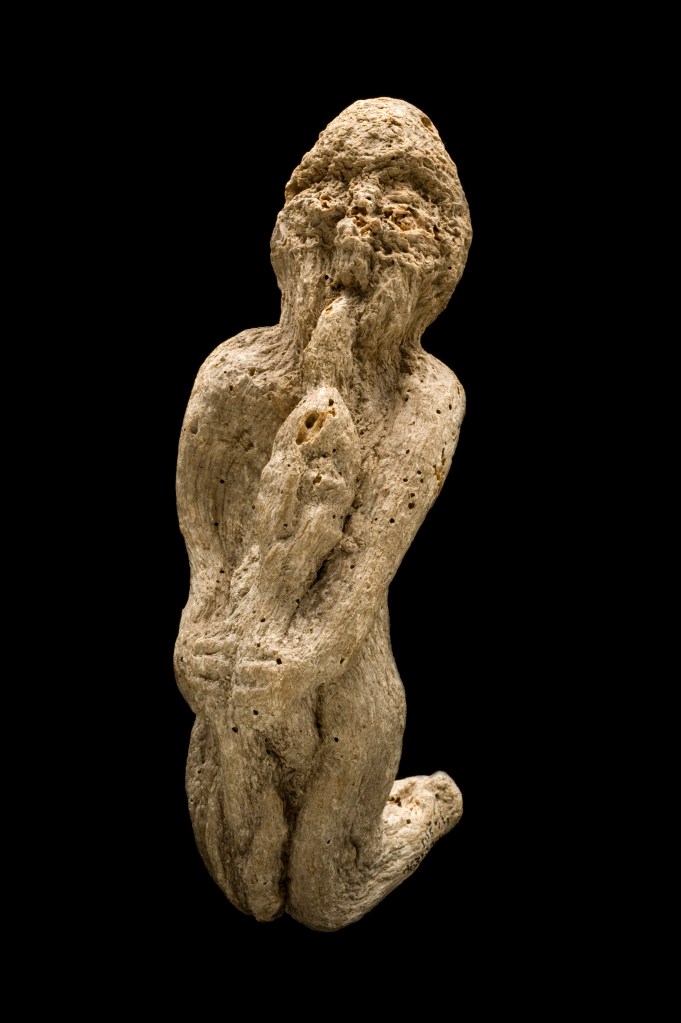
Credit: Science Museum, London. Wellcome Images
Anthropomorphic objects are those whose shape resembles that of a human. They have often been attributed with special powers or healing properties. Mandrake roots have long been associated with pagan beliefs and magic rituals. They have also had a range of medical applications.
Such was the perceived resemblance to the human form that mandrake roots were said to scream when pulled from the ground. Medically, they were believed to improve fertility although in ancient Greece, wine infused with mandrake root was used to numb patients before surgery.
These homunculi were tales filled with superstition, symbolism, and the perpetual human yearning to play God, blend knowledge with creation, and attempt to manifest life itself.
The idea of the homunculus has roots in the belief of Preformationism where it was believed that sperm cells contained fully formed, but tiny versions of a human that was then grown in a woman’s womb and that she did not contribute genetically to the child. But there are other, ways of looking at the idea of preformation and homunculi as more of symbolism to where each man had inside them that was their true spirit and then some that have these innate creative abilities
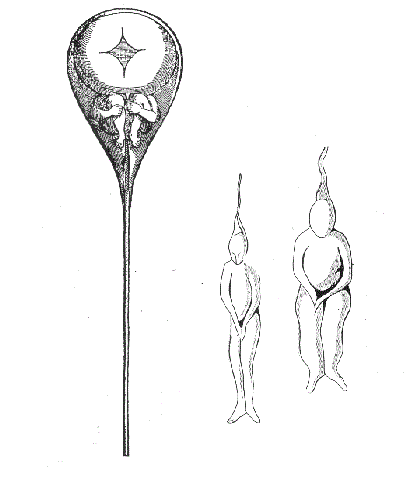
They say that the homunculus had innate abilities, and that these creatures had because of the essense of the man who contributed sperm. So there are some ways of, you know digesting this information as purely symbolic. And then there all also are some religious interpretations of preformationism where it’s viewed as the Christian point of view that we all have Jesus Christ inside of us.
Homunculi in Culture: A Foundation for Modern Exploration
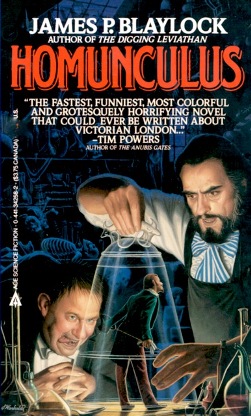
Legends of homunculi were not just confined to dark labs or shadowy corners; they permeated cultural storytelling and served as a precursor to today’s fascination with life science. This obsession is mirrored in our modern era as we train AI models to generate art, predict trends, and even supposedly foretell the future—a digital continuation of training mythical creatures for human benefit.
AI: The Modern Homunculus
Stepping into the 21st century, the concept of a “homunculus” is reborn, not from an alchemical formula, but through lines of code and silicon circuits. Our artificial intelligence systems still reflect humanity’s timeless pursuit: outsourcing tasks, enhancing capabilities, and expanding our economic and creative reach. Today, AI models, being more accessible than ever, mirror the elusive homunculi of the past but with the transparency and debate of modern ethics and technology.
The Dawn of Organoid Intelligence: A Sci-Fi Reality
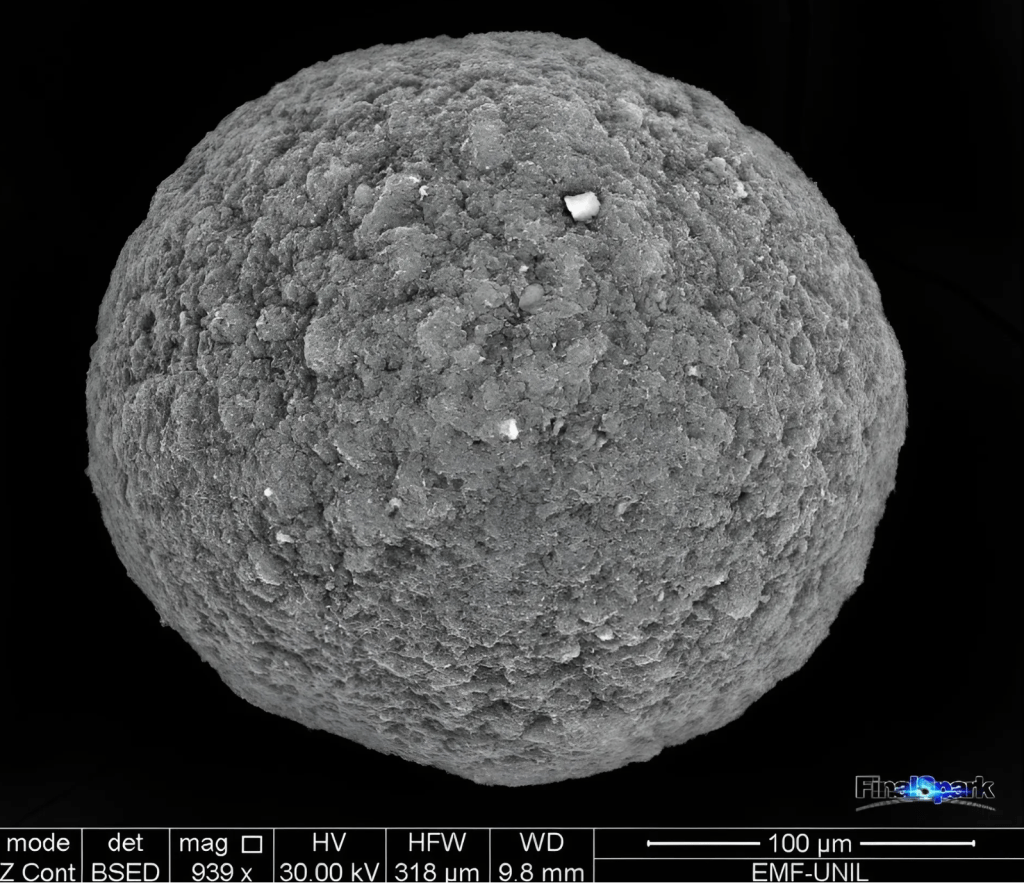
It’s not just AI that shimmers with futuristic potential; organoid intelligence (OI) pushes the envelope further. Imagine silicone chips infused with clusters of human brain cells, potentially storing up to 2,500 terabytes. This represents a staggering leap toward biocomputing. Linking human biological matter with technology creates an eerie parallel to alchemy, transmuting essence into function, leading to possibilities that seem ripped from science fiction tales but are becoming ever more real.
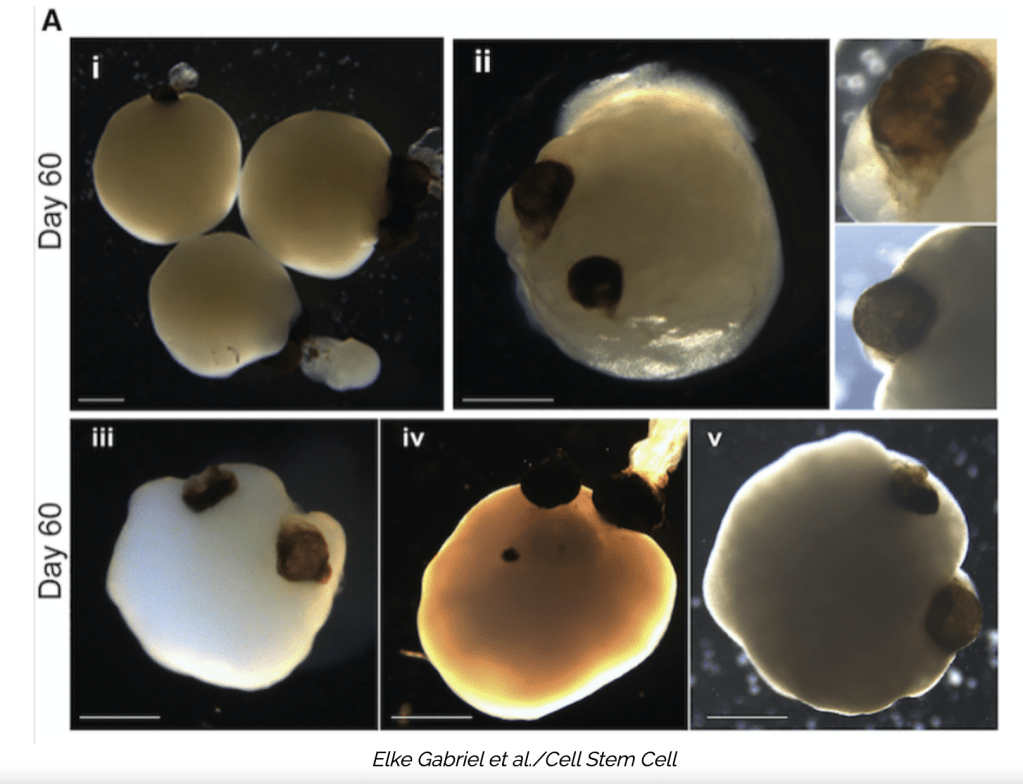
Conclusion: Reflections on Creativity and Creation
In exploring both AI and OI, what becomes evident is humanity’s continuous cycle of technological fantasy and reality. History and science repeat, with each era borrowing from the themes of its predecessors, reshaping them through mature lenses.
As AI continues to evolve, just as the story of the homunculus transformed over time, so too will our relationship with technology and creativity. We must be mindful of how we balance the scales—between marveling at our ability to create and recognizing the ethical lines we toe.
Join us on this winding journey of discovery, speculation, and reflection, as we consider not only the capabilities of AI and organoid intelligence but the deeper questions they pose about ourselves as creators and what lengths we’re willing to go in harnessing the mysteries of life itself.
 Nad Knows

Leave a comment