
Today, I’m sharing the fascinating journey to the Teotihuacan pyramids in Mexico with special guest, Laura Ahmed. We explore the beauty, mystery, and vibrant energy of this ancient civilization, guided by the incredible Julio from Corazon Chilango tours.
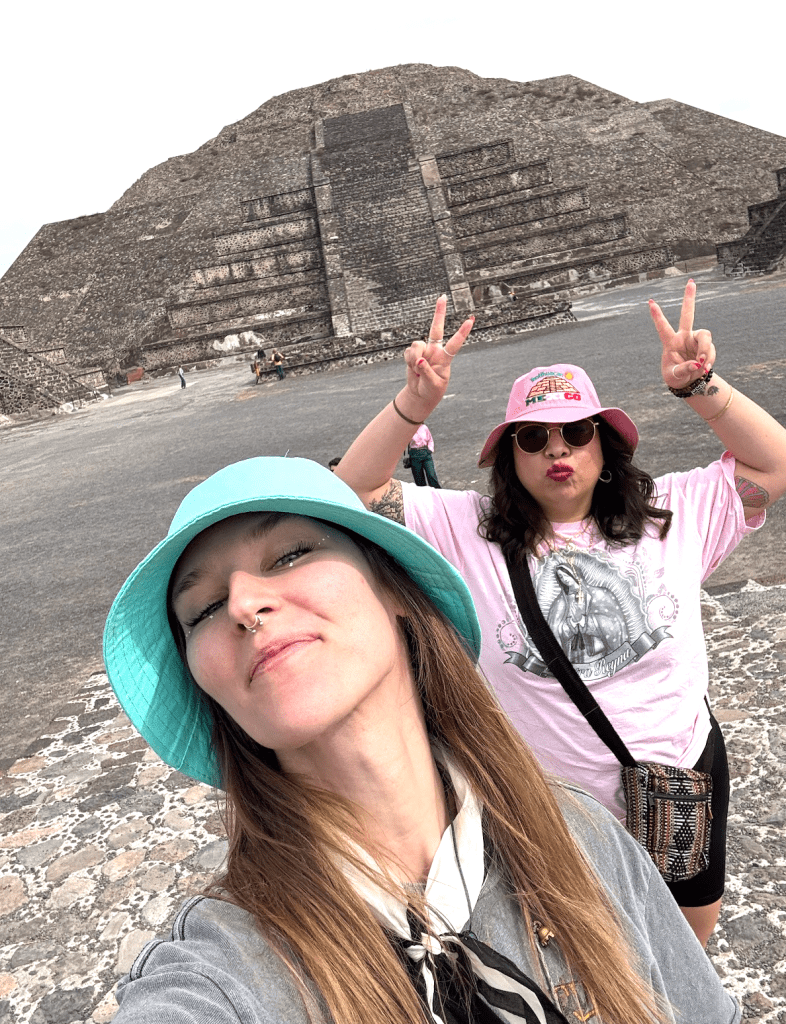
A Journey Through Ancient Times
Our adventure began with a captivating introduction to Teotihuacan, a civilization that thrived for over 750-800 years, hosting a population of around 200,000 people. One of the most intriguing aspects of Teotihuacan is the absence of depicted ruling classes or kings in their art and artifacts, which leads to numerous intriguing theories about its societal structure.
The Tour with Julio
Touring the site with Julio was an enriching experience. He provided us with in-depth knowledge, making us even more curious about this ancient city. Julio’s insights on communal living highlighted the strong sense of family and community that existed, where different compounds housed priests, artisans, and families, demonstrating a rich, diverse, and collaborative society.
Sunken Patios and Pyramids
Among the highlights were sunken patios that is said to reflect the stars at night when they were filled with water, providing ancient Teotihuacanos with natural lighting on full moon nights.
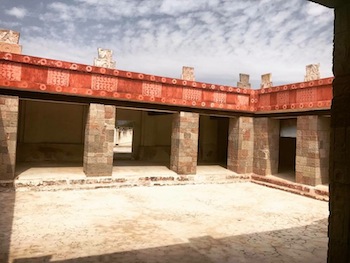
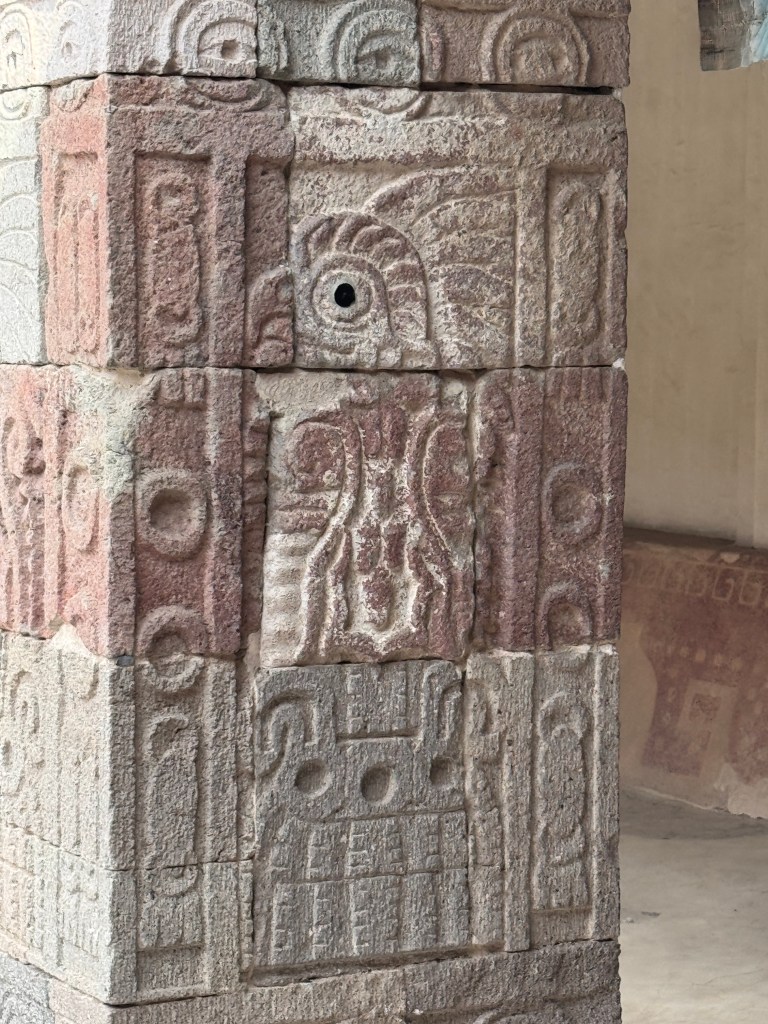
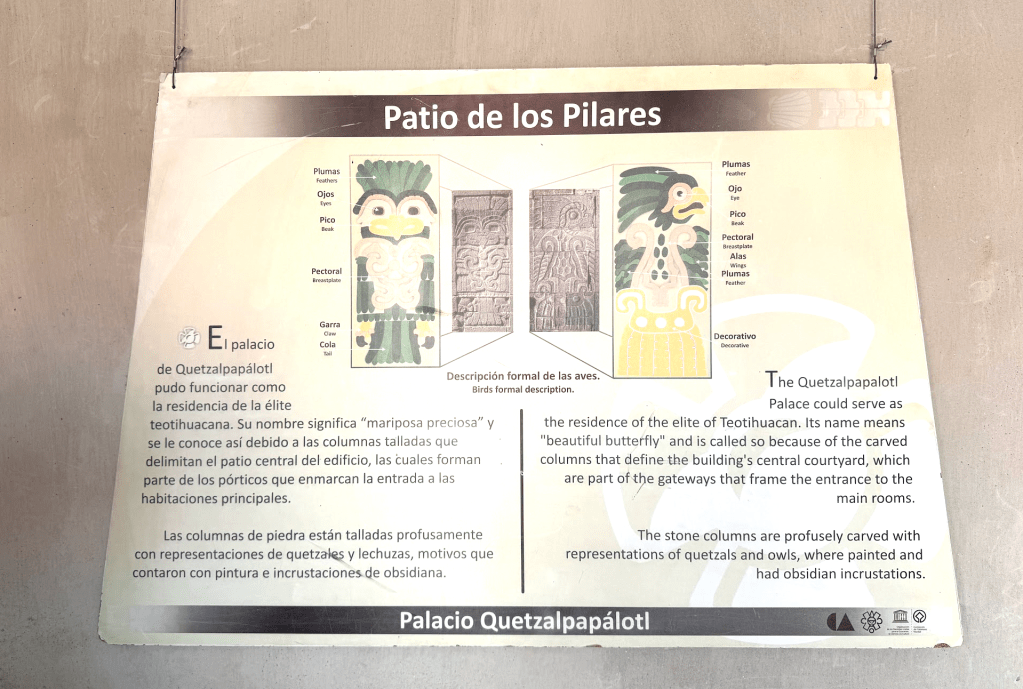
We were captivated by the murals depicting jaguars and birds, representing fertility and nourishment. The use of conch shells in rituals reminded us of the cleanse we received in Mexico City, where part of it they blew large conch shells at our chest and back, as a form of sound healing.
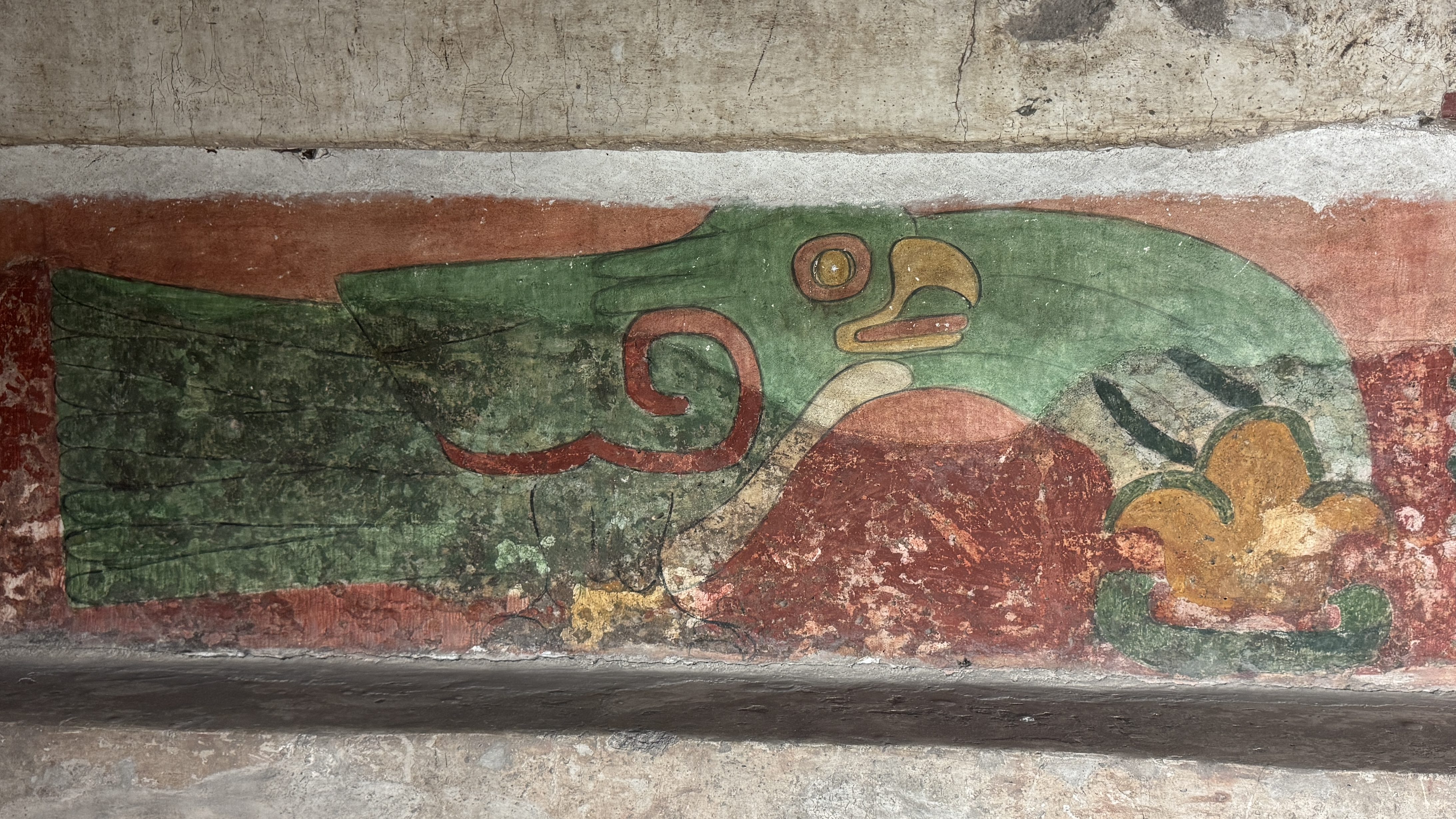
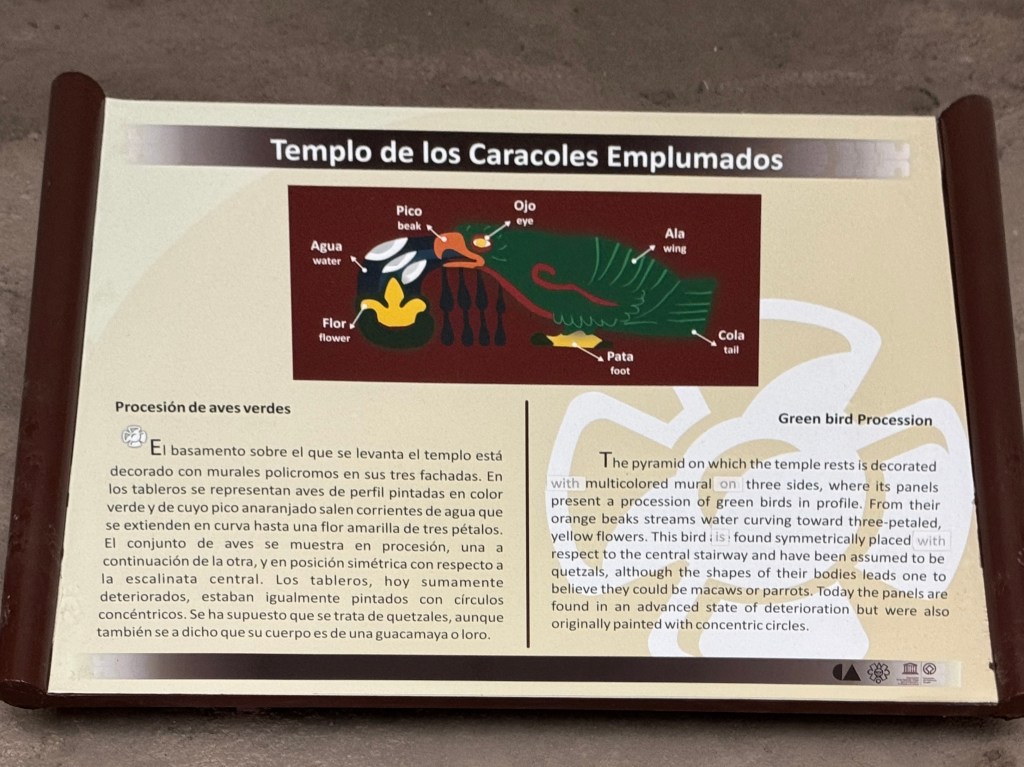
A Society Steeped in Diversity and Innovation
Teotihuacan was a melting pot of cultures and crafts. Each group under the city’s umbrella contributed to a thriving metropolis known for its textile and trade. The neighborhoods reminiscent of modern-day Chinatowns or Little Italys, with each culture that lived there had their own epicenter. And each culture had their own representative that represented their people’s interest within the political system at Teotihuacan.
Palace of Xalla
There was an area that we were not able to go to, called the Palace of Xalla (pronounced shalla) which was believed to have been an area for priestesses to live and perform spiritual rituals.
Pyramid of the Moon
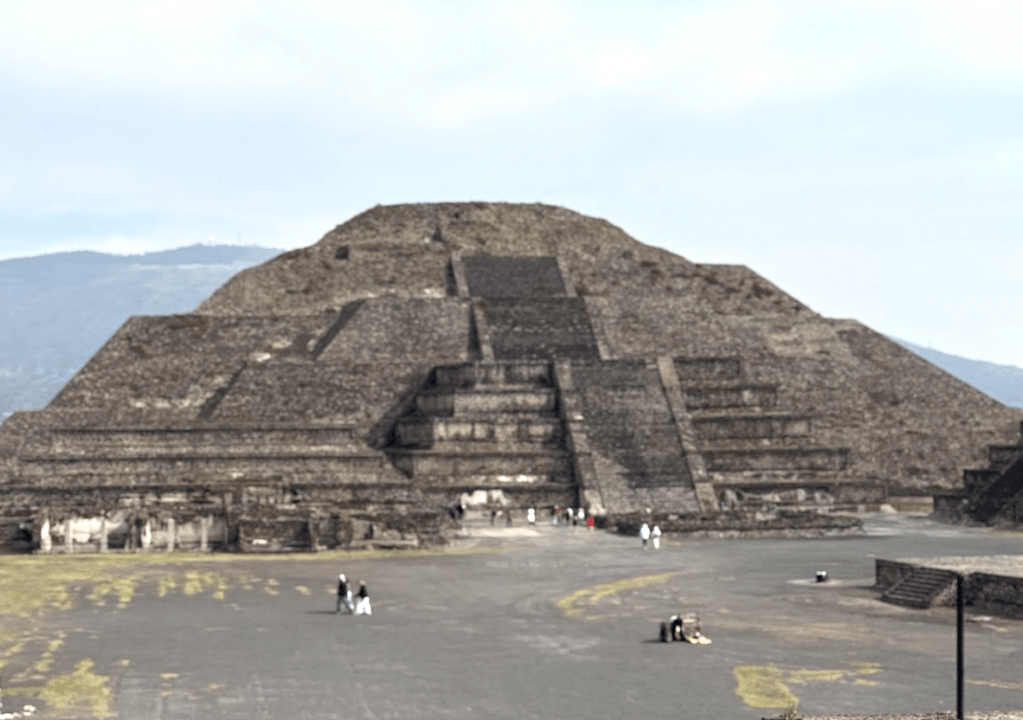
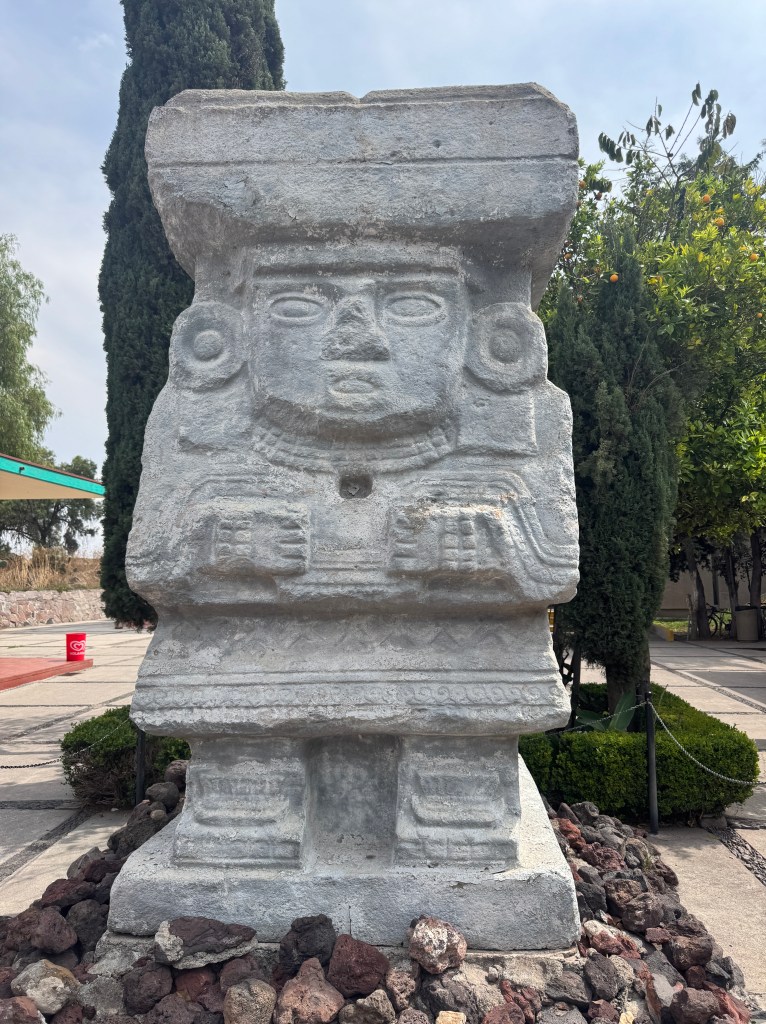
The Pyramid of the Moon, though massive, is not as large as the Pyramid of the Sun, which is the third largest pyramids in the world. The Pyramid of the Moon is associated with water and fertility. Ceremonies and rituals took place there to nourish the land and seemed to represent the feminine aspect of their spiritual culture. The great water goddess of Teotihuacan was central to their ritual activities.
In front of the pyramid was a square, slightly raised up altar where if you stood on it, while someone else was far away on the ground, the acoustics are so supreme that the person far away could hear the person on the square altar. This pyramid was actually not entirely built by the people at Teotihuacan, they discovered that the base of this pyramid was much older than the later phases of building. Likely the people who settled the area found the mounded structures and chose that area to continue building. The mystery of who actually built the first structures is still unknown, adding to the mystery of this place.
Pyramid of the Sun
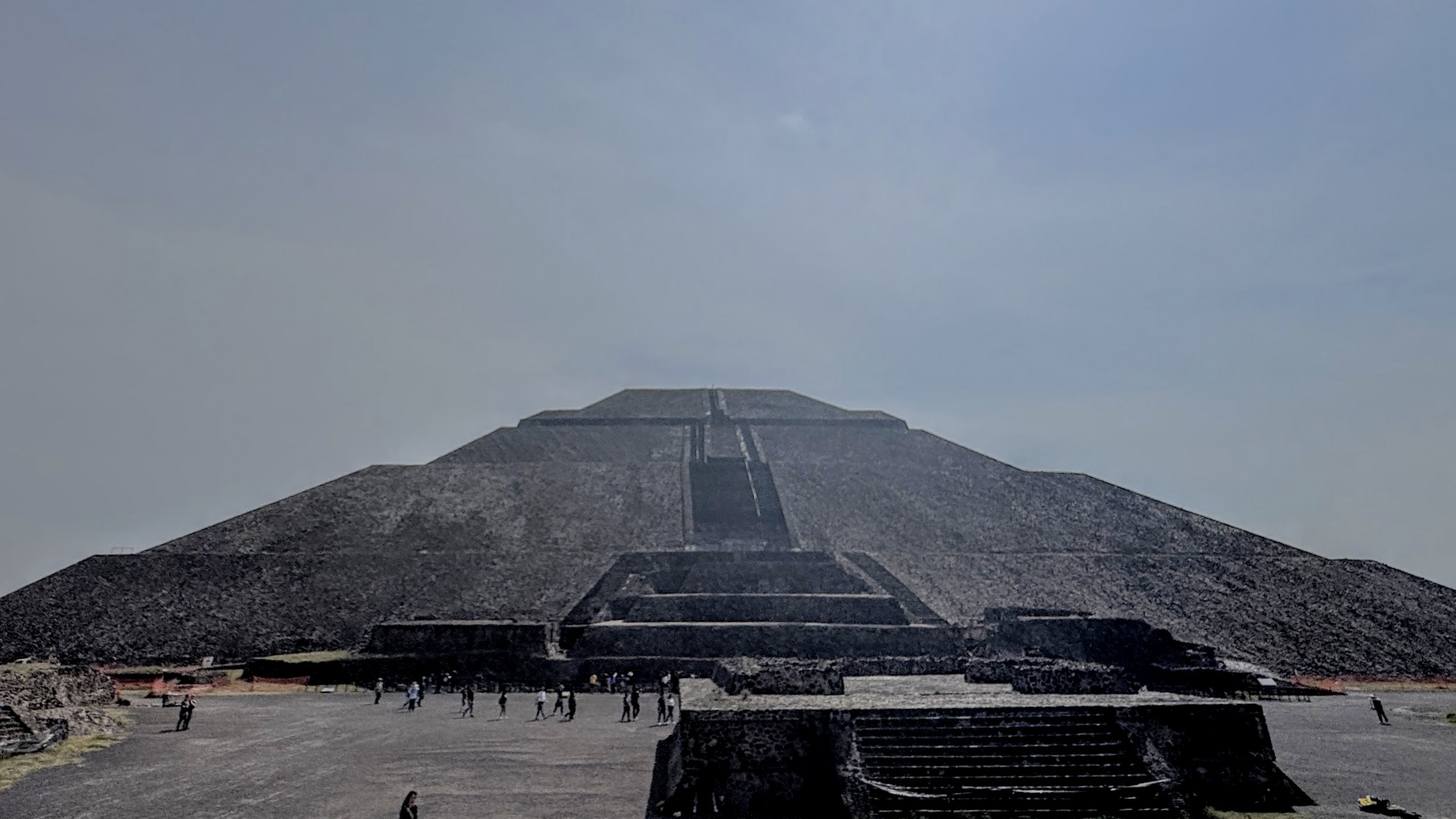
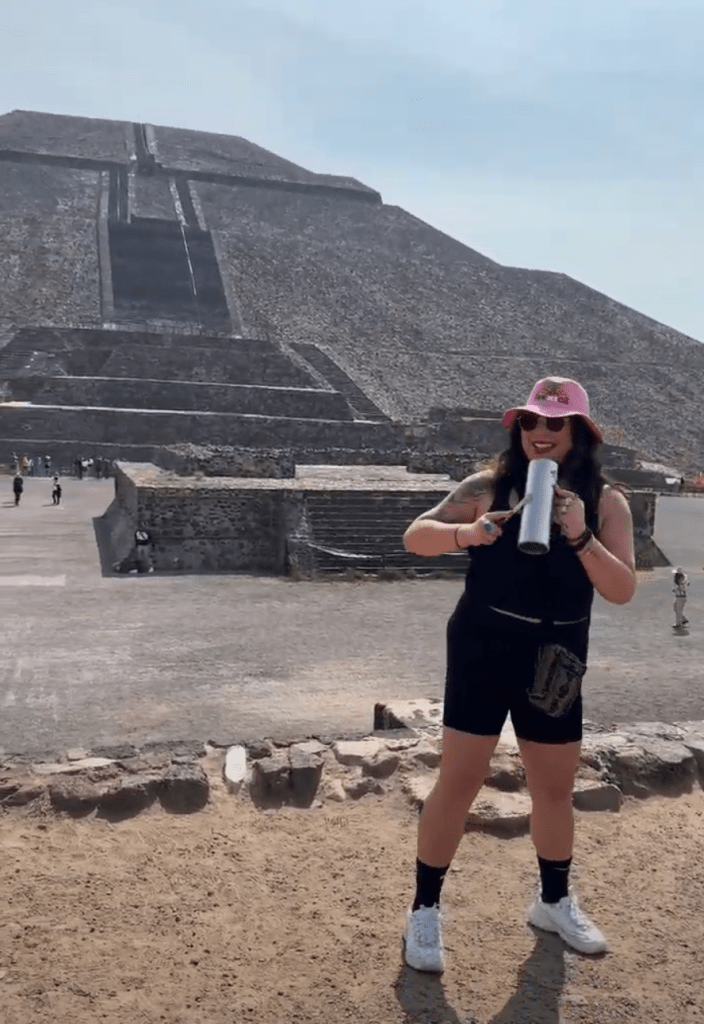
It’s nearly impossible to capture the grandeur of these pyramids on camera and the Pyramid of the Sun is no exception. Third largest in the world, it was staggering. We were not able to journey to the top because it had been closed off since COVID. Although I’ve heard rumors of them opening back up since we went there. The construction of this pyramid started after the Pyramid of the Moon and this one does not have older layers beneath it. Laura shared a musical offering at the Pyramid of the Sun, when she played her guira at the base of the pyramid. She started out shy but after encouragement from our tour guide Julio, she began.
Pyramid of the Feathered Serpent
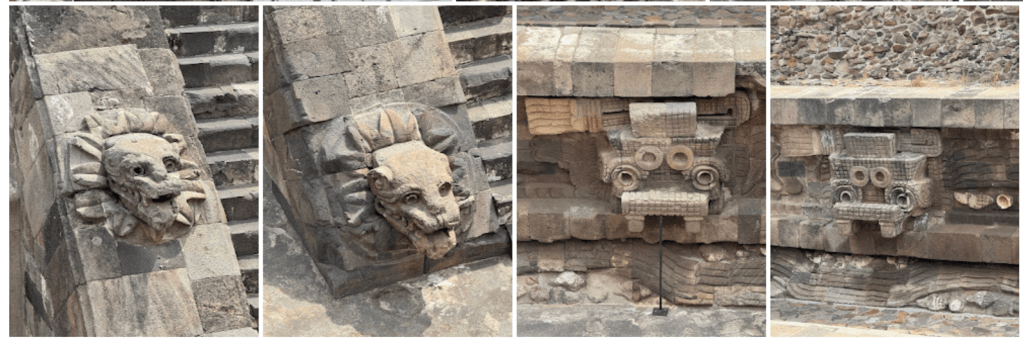
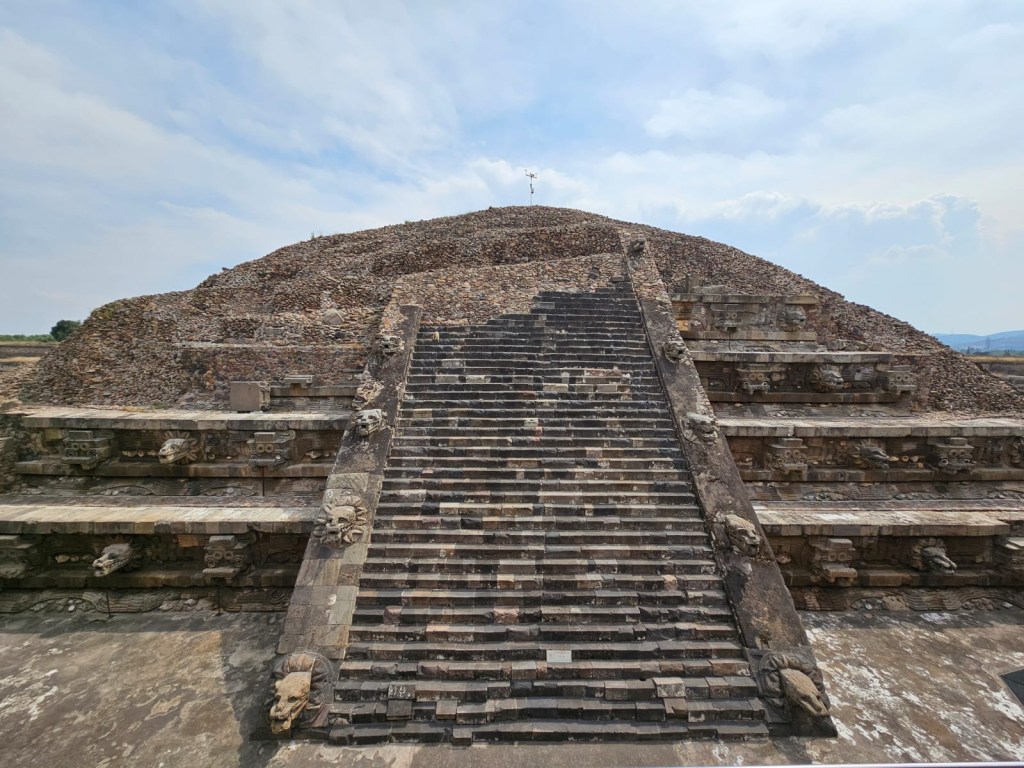
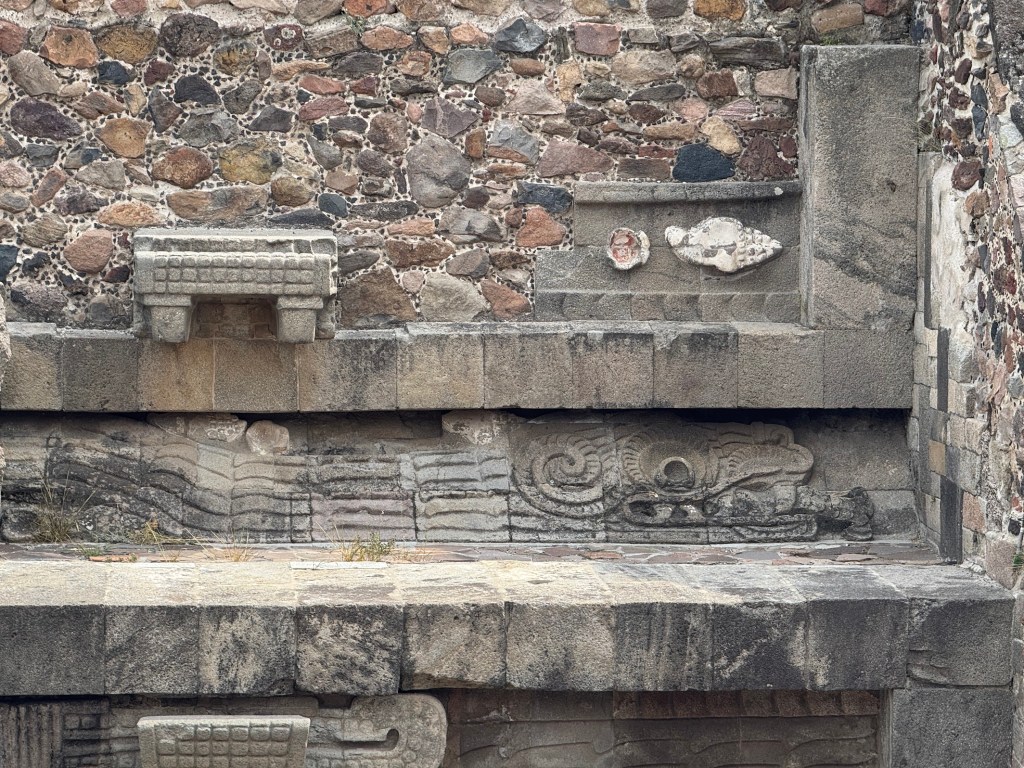
Julio then took us to the Pyramid of the Feathered Serpent, a site filled with symbolic faces, seashells, and dynamic history. This area was the citadel, a political center and less so a spiritual center. Discussion around a recently discovered tunnel underneath that has a “river” of mercury adds more layers to this mysterious place. The feathered serpent is also known as Quetzacoatl, which was one of the creator gods. There are also busts of what is believed to possibly be a corn deity. The idea was that they gathered the images that depicted power and used them on this pyramid as symbolism of their strength and power.
Theories and Mysteries
Although many historians believe that although there are no depictions of a ruling class, kings, etc, that there still must have been. But my theory on the lack of a ruling depiction could potentially point towards a matriarchal society, where communal living and artistic expression reigned supreme. In those times having depictions of women directing society may have brought unwanted strife to the community. Although it didn’t seem like a strictly female led society, the feeling was more balanced that both the feminine and masculine aspects were honored equally. The symbolism of Quetzalcoatl as well as the great water goddess of Teotihuacan could indicate a balanced society between masculine and feminine energies.
Rapid Growth, Rapid Decline
This area saw a population explosion as it great to over 200,000 people very quickly. But it suffered the fate of a rapid decline as well. There seemed to be rebellions as well as drought conditions that hindered crop growth. I wonder if the word of women running the show a bit more got out and brought danger and conquests. One interesting clue is that the Palace of Xalla was one of the few places that was burned down during the period of decline. Was that a revolt agains the class of priestesses? Another interesting clue is that after the collapse, the gods depicted throughout this culture dispersed and assimilated into Maya and Aztec cultures during their development but the water goddess that was revered so highly here did not. Was the feminine aspects of this culture purposefully rejected? Were there neighboring forces that resented the power that women and feminine deities held in Teotihuacan?
A Day Ending in Celebration
Our hot and sweaty day ended with a memorable visit to Julio’s friend Miguel’s home, which was also an obsidian workshop, they produced mezcal, tequila and pulque. Learning about the agave plant’s multifaceted uses and experiencing local hospitality was a perfect conclusion to a deeply moving day.
Final Thoughts and Reflections
Our Teotihuacan experience left us with gratitude and more questions than answers. It was a journey filled with history, culture, and incredible people. We were embraced by the land and its people, feeling blessed and connected to something much greater than ourselves. If you ever find yourself near Mexico City, a tour of Teotihuacan with a local guide is a must, check out Corazon Chilango Tours.
The layers of history and culture you uncover with each step are transformative. Until next time, stay curious and keep exploring! Thank you for joining us on this Nad Knows adventure! We hope our journey inspires you to explore the mysteries of our world and appreciate the cultures that have shaped history.
 Nad Knows
Leave a comment